
Komatsu PC20E-6
 Show more photos

Info about the machine
- Specifications
- More specifications
- Downloads
Weight (kg)
2,190
Power source
Electric
Digging depth (mm)
2,370
Reach (mm)
4,100
Bom
Mono boom
Undercarriage
Rubber belts
Other equipment
Komtrax monitoring

This electric mini excavator suits confined construction work
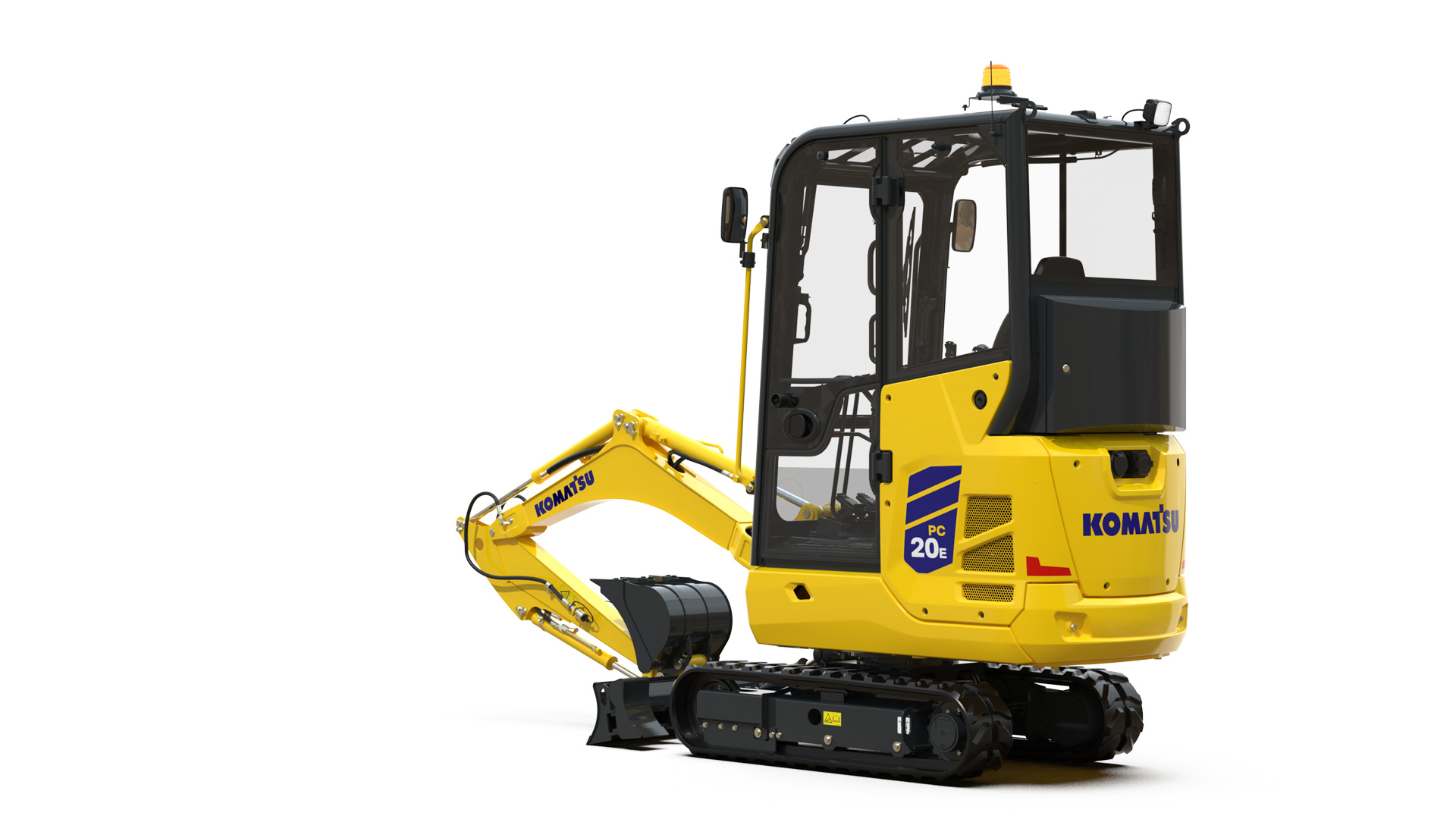
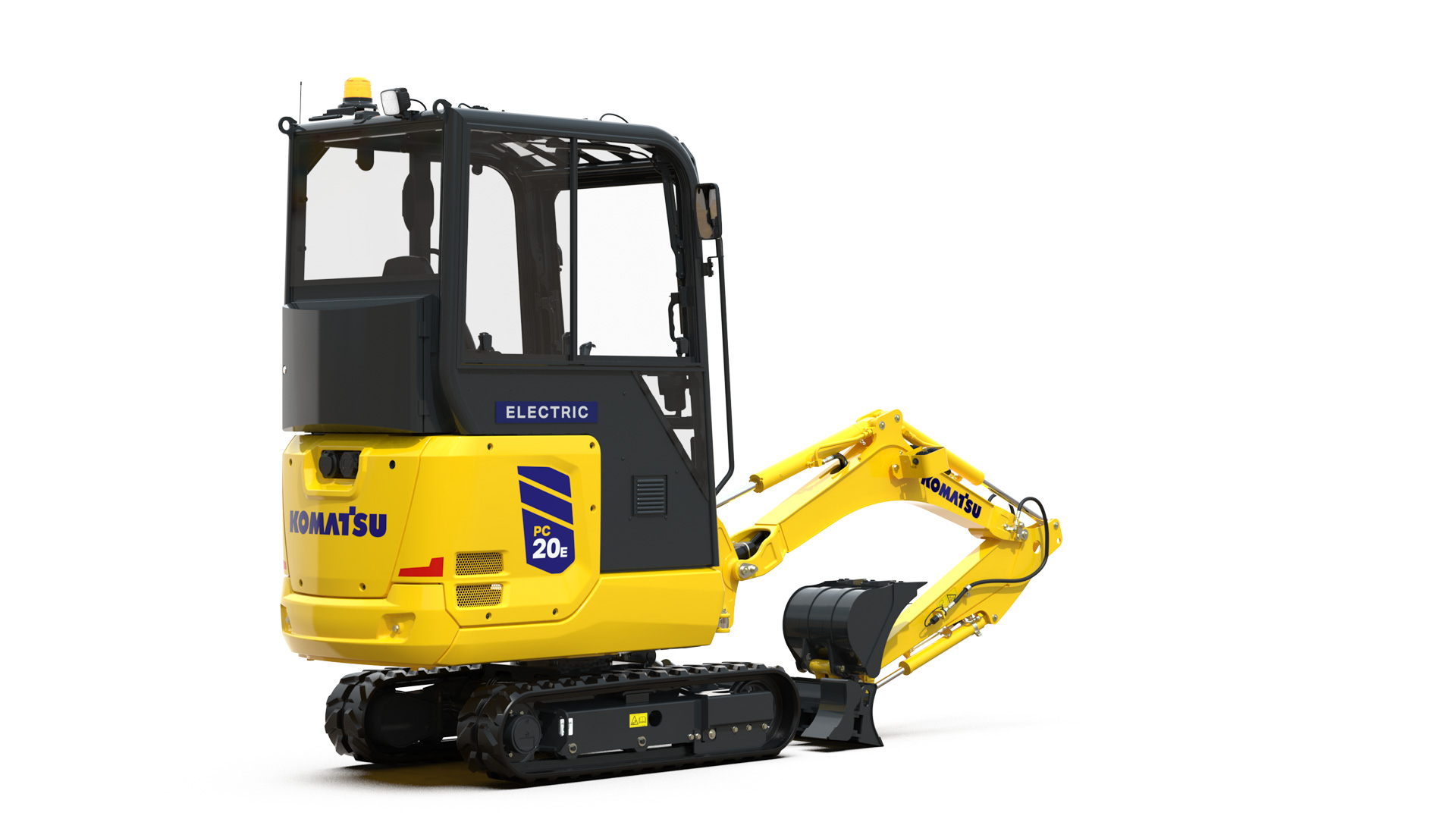
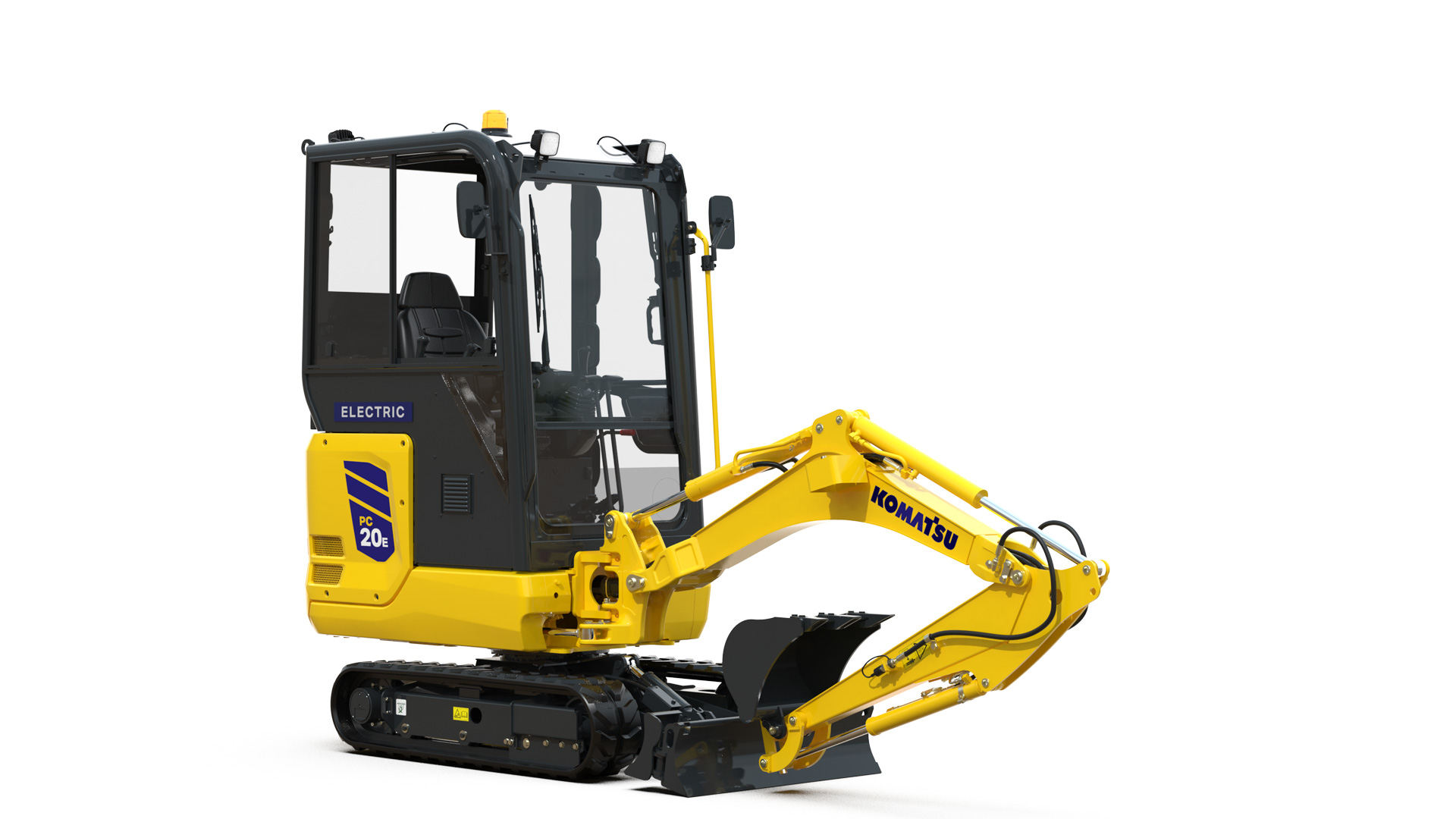
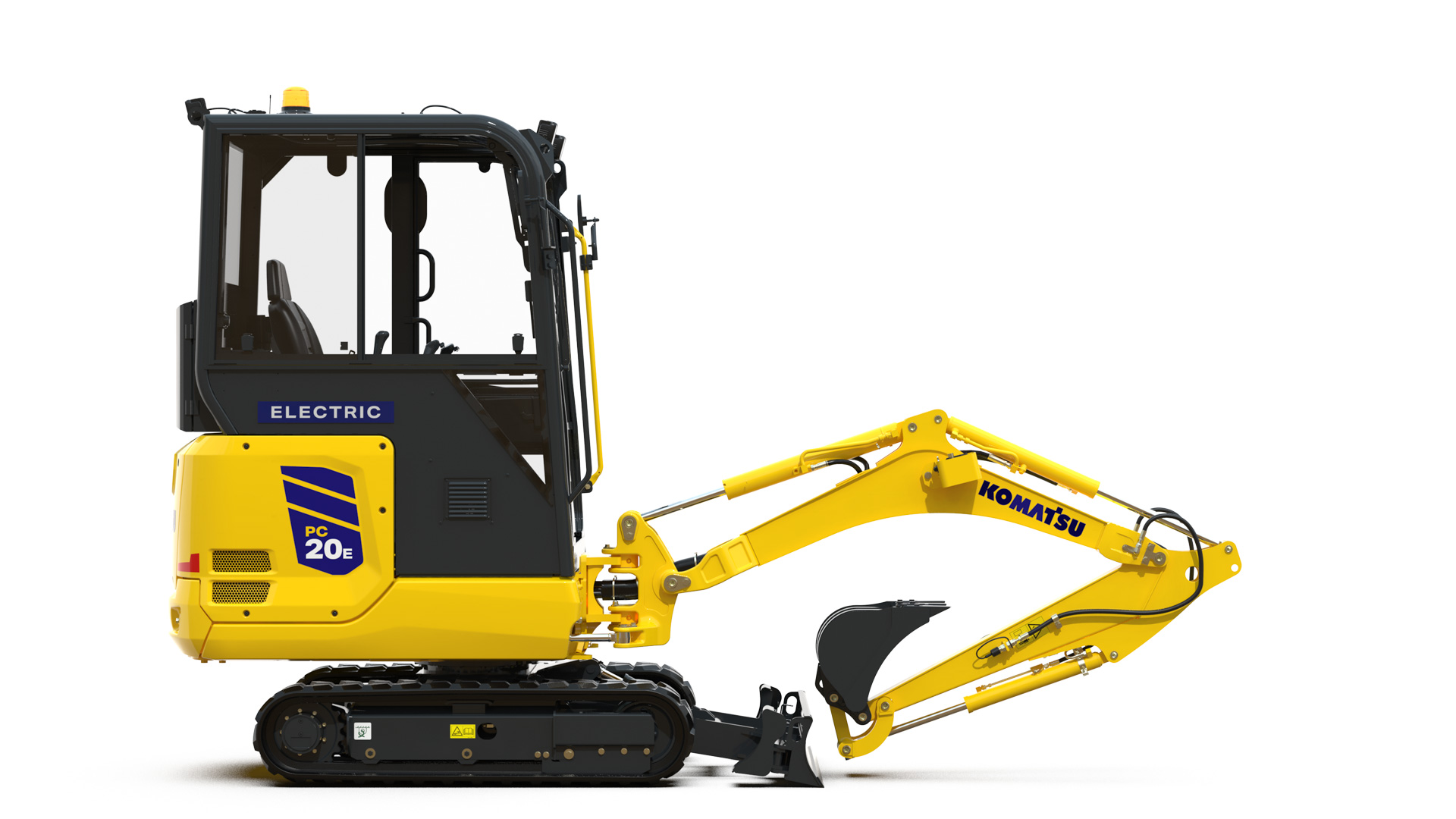
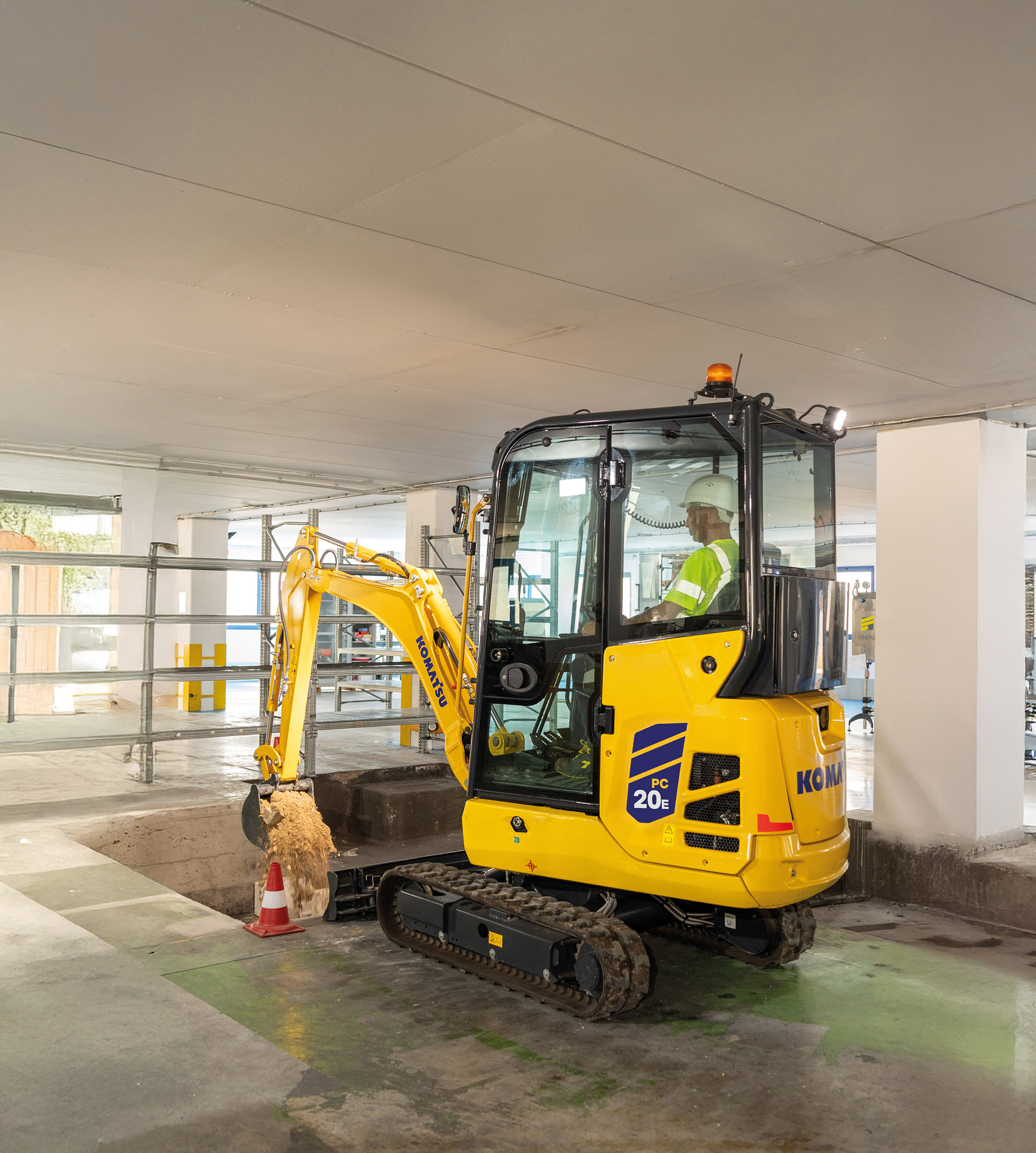
Komatsu PC20E-6 is an electric mini excavator for excavation, trenching, grading and general site preparation. Its 2,190 kg machine weight supports work where access is limited and transport dimensions matter. The machine is 3,845 mm long, 990 mm wide and 2,370 mm high. These dimensions make it relevant for contractors working in narrow passages, courtyards and restricted urban areas.
The electric drivetrain uses a 12 kW Komatsu power unit. This configuration is relevant for work where exhaust free operation supports the task. It also gives planners a clear basis when matching the machine to indoor work or enclosed sites. For projects with defined environmental requirements, the electric format supports compliance planning from the start.
The undercarriage supports access where space is limited
The variable undercarriage helps the excavator adapt to changing site widths during daily operation. This is useful when the machine must pass through narrow openings, then work with a broader stance. On small construction sites, access conditions change between transport, positioning and excavation. A variable undercarriage gives a practical advantage in those transitions.
Skidsteer travel supports manoeuvring in confined work zones. This matters when operators work close to buildings, fencing or stored materials. The compact width also helps when the excavator is used along walls or inside renovation areas. For contractors handling short cycle tasks, manoeuvrability has direct value in daily planning.
The boom and hydraulic setup support attachment based work
The machine is fitted with a mono boom. This boom layout suits standard digging and handling tasks where simple geometry is preferred. It supports predictable movement during trenching, backfilling and light material handling. For many users, that gives a clear fit with routine civil work and property maintenance.
Proportional auxiliary hydraulics extend the machine's use with hydraulic attachments. This matters for companies that need one excavator for several recurring tasks. Attachment control becomes more precise when hydraulic flow can be adjusted from the machine. That is relevant for tools where smooth movement supports both accuracy and material control.
The cab supports daily work across changing conditions
The driver cab includes heating, joystick control, a radio and an outer rear view mirror. This setup supports year round operation and clear machine handling during longer workdays. Heating is relevant for cold weather assignments and early morning starts. Joystick control provides the expected operating layout for this machine class.
The rear view mirror supports awareness around the machine during repositioning and site traffic. The radio is a simple but relevant feature for operators spending many hours in the cab. Together, these details describe a machine configured for practical daily use rather than basic occasional work.
The lighting and monitoring equipment support site management
Lighting includes two front LED work lights on the cab roof, one rear LED light and an LED light on the boom. A rotating beacon is also fitted. This equipment supports visibility during winter work, indoor demolition tasks and jobs that begin or end in low light. Good light placement also helps when digging near edges, utilities and structures.
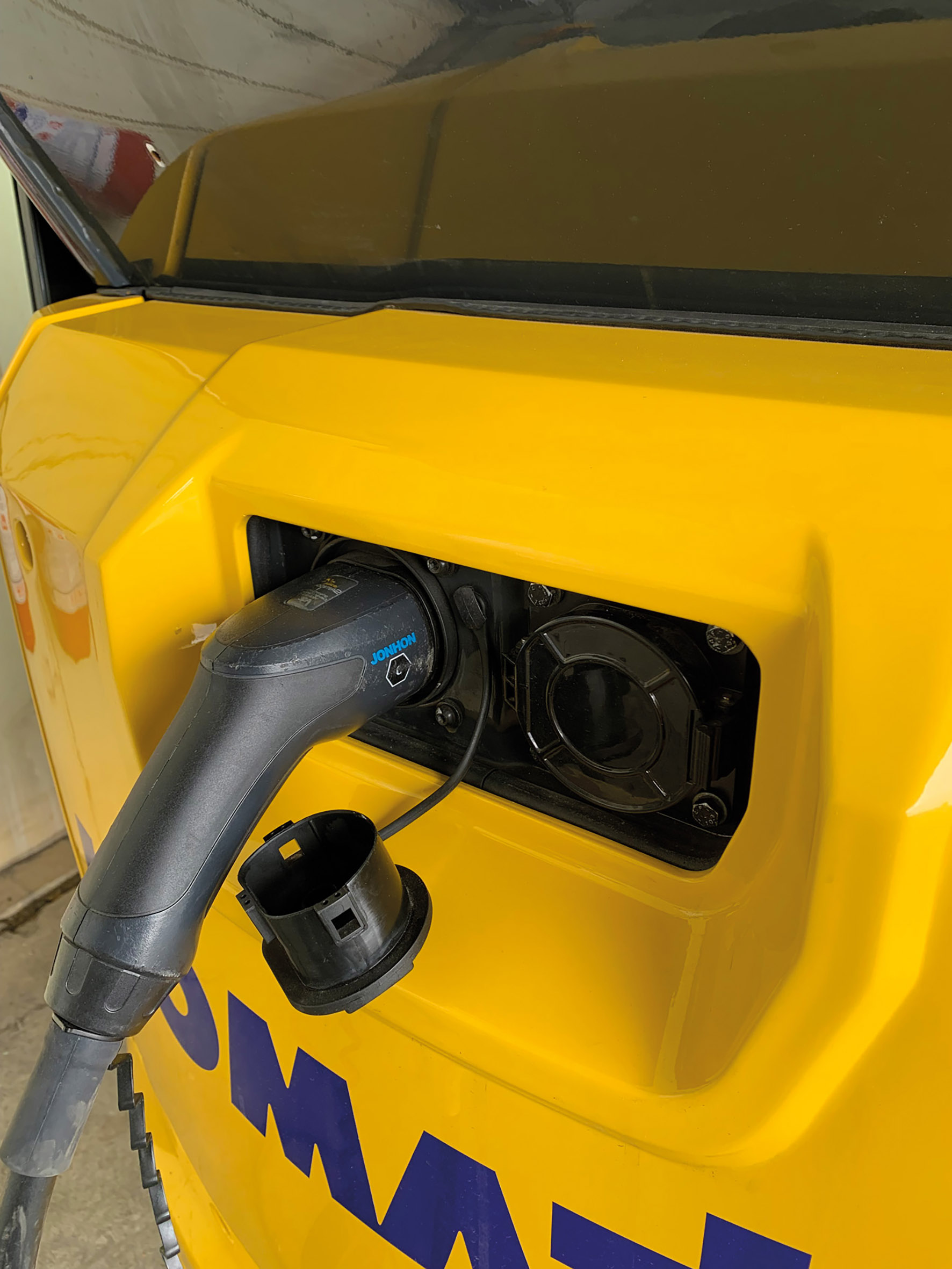
The machine also includes a back up alarm, battery main switch and an onboard 230 V charger. These details support routine site handling and charging logistics. Komtrax monitoring adds a useful management layer for fleet operators who track machine status and deployment. For companies evaluating an electric excavator, the stated dimensions, hydraulic setup and cab equipment provide a clear basis for assessment.