Manitou MRT1845 400/115D VISION ST5
 Show more photos


Info about the machine
- Specifications
- More specifications
- Downloads
Lifting height (mm)
18,000
Lifting capacity (kg)
4,500
Transmission
Hydrostatic 40 km/h
Power source
Diesel
Weight (kg)
14,100
Construction height (mm)
3,040
Length (mm)
6,060
Width (mm)
2,450

This rotating telehandler is built for lifting and handling on site
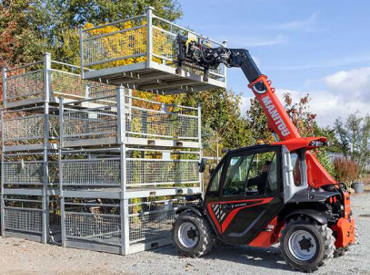
Manitou MRT1845 400/115D Vision ST5 is a rotating telehandler for lifting, handling, and material placement on construction sites. It combines 18,000 mm lifting height with a lifting capacity of 4,500 kg. This gives contractors a clear basis for planning load handling across several work zones.
The machine has a transport length of 6,060 mm, a width of 2,450 mm, and a construction height of 3,040 mm. Operating weight is 14,100 kg. These dimensions matter when access routes, storage areas, and transport planning are reviewed before arrival on site.
The rotating upper structure supports work where loads must be placed at height or around obstacles. That matters on projects with restricted access, staged deliveries, or several active trades in the same area. A rotating telehandler can reduce the need to move the whole machine between lifting points.
The boom and steering layout support precise load placement
This machine uses a quadro boom. The boom layout supports controlled extension and load positioning during lifting and reach work. It is relevant for contractors handling pallets, building materials, and equipment where placement accuracy affects workflow and site safety.
Four wheel steering improves manoeuvrability in confined site conditions. This is relevant on urban projects, around structures, and in loading areas with limited turning space. Better steering control also helps when the machine must align with trucks, storage zones, or work fronts.
The supplied fork frame is PFB 1320 mm with forks in 125 x 50 x 1200 mm. The fork setup is rated for 4,500 kg. This configuration supports standard pallet handling and general material transport where fork work is part of daily operation.
The cab and control systems support daily site operation
The driver cab includes heating, a front sun visor, and a roof sun visor. These details support visibility and working conditions during long shifts in changing weather. Clear sight lines matter when lifting near structures, traffic routes, and personnel.
A reverse camera is fitted to support rear visibility during repositioning. This is useful where space is limited and machine movement must be checked carefully. Better rear observation can support safer travel between loading points and work areas.
Radio remote control is included. This allows the operator to control functions while standing outside the cab when the task requires another viewing angle. It is relevant during load placement, attachment handling, and operations where direct sight of the load improves control.
The cab also includes a Bluetooth USB car radio with an extra microphone rated at 100 W. This is part of the stated machine configuration. For some fleets, this detail supports communication and routine use during mobile site work.
The engine and hydraulic setup are specified for practical fleet use
The engine system uses SCR with AdBlue. This is a relevant fact for fleet planning, fuel management, and service routines. Buyers comparing site machines often need clear information about aftertreatment systems before the machine enters an existing service structure.
Remote battery terminals are included. This detail supports maintenance access and practical service handling during routine checks. Ecostop is also part of the machine specification and contributes to operation planning where idle time is monitored closely.
Extra hydraulics are fitted. This matters for companies that need flexibility for hydraulic attachments and task changes across different jobs. Attachment driven functions can broaden machine use where lifting is combined with other handling requirements on the same site.
This specification suits contractors who need reach and handling in one machine
The stated lifting height, lifting capacity, steering system, and fork equipment make this telehandler relevant for building contractors, industrial projects, and material logistics on site. It suits tasks where one machine must lift, place, and move loads across changing work areas.
The combination of 18,000 mm lifting height and 4,500 kg capacity provides a factual basis for assessing material flow and placement needs. Buyers can compare these values directly with project demands, attachment plans, and transport conditions before adding the machine to their fleet.
For companies evaluating a rotating telehandler, this machine presents a clear specification for reach, capacity, manoeuvrability, and control. The included forks, remote control, extra hydraulics, and cab equipment support practical use where lifting and handling must work together throughout the day.